

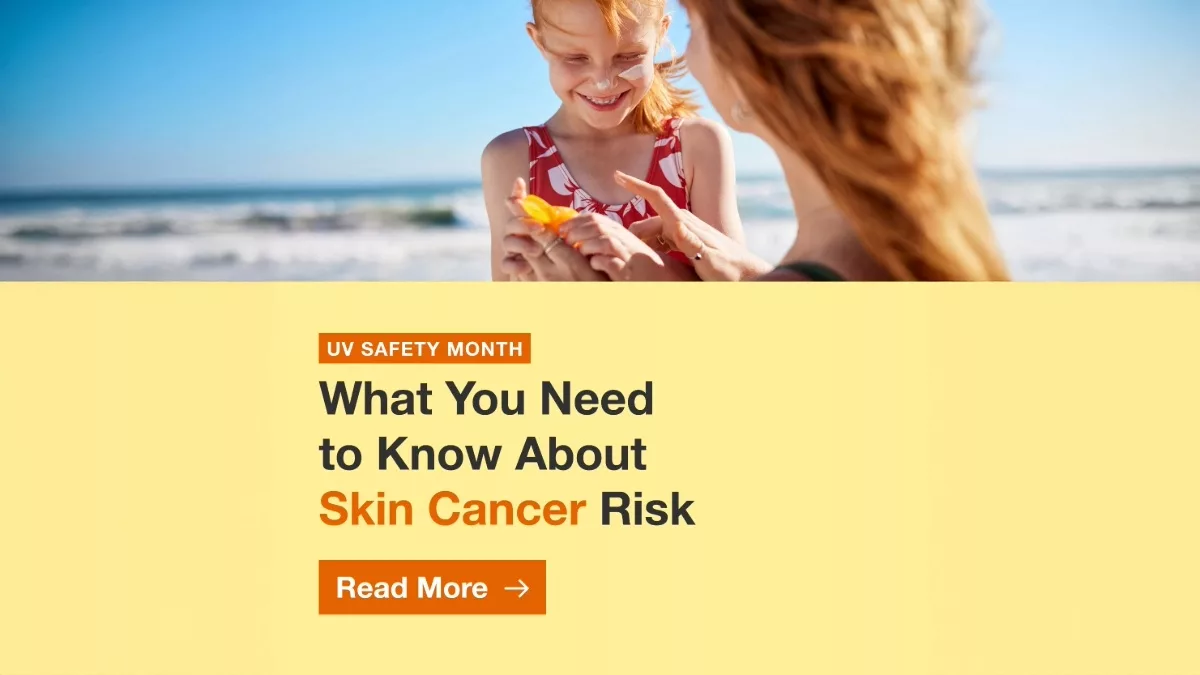
The sun is a powerful source of energy, but without protection, its ultraviolet (UV) rays, along with those from artificial sources like tanning beds, can cause lasting skin damage and significantly raise your risk of skin cancer, the most common cancer in the United States. July is recognized as UV Safety Month, a national observance that raises awareness about the dangers of UV exposure without protection and encourages habits to protect your skin every day.
While spending time outdoors has many benefits, being sun smart is essential to lifelong skin health. Understanding your risk and taking simple, consistent steps to protect your skin can make all the difference.
What Are UV Rays, Why Do They Matter, and What’s Link Between UV Exposure and Skin Cancer?
UV rays are a form of invisible radiation from the sun and from artificial sources like tanning beds that can damage your skin and eyes. There are two main types of UV rays that affect your body:
- UVA rays penetrate deep into the skin and contribute to premature aging, long-term skin damage, and sunburn. They’re present year-round, even on cloudy days, and can pass through windows.
- UVB rays are more intense and primarily responsible for sunburn. They directly damage skin cells and play a significant role in the development of skin cancer.
- In addition to harming your skin, UV rays can also damage your eyes, increasing the risk of cataracts, macular degeneration, and even cancers of the eyelids. Wearing UV-blocking sunglasses is just as important as protecting your skin.
The Link Between UV Exposure and Skin Cancer
Skin cancer affects 1 in 5 Americans by the age of 70, and UV radiation is the leading environmental cause. Here’s how it connects to the three main types:
- Basal cell carcinoma (BCC): the most common and slowest-growing form of skin cancer. It’s typically found on areas that receive frequent sun exposure, such as the face, ears, neck, scalp, shoulders, and back.
- Squamous cell carcinoma (SCC): often linked to chronic UV exposure over time. It can spread if left untreated and is most commonly found on the ears, scalp, neck, and hands—areas regularly exposed to sunlight.
- Melanoma: less common, but far more dangerous. Melanoma can spread quickly and become life-threatening if not caught early. It can appear on any part of the body, including areas not typically exposed to the sun, such as the soles of the feet or under nails. While UV exposure and sunburns increase risk, genetics and intermittent intense exposure also play a role. That’s why checking your entire body, not just sun-exposed areas, is crucial during a skin self-exam.
Who is Most at Risk?
While anyone can develop skin cancer, some factors increase your risk, including:
- Fair skin, light hair, or light eyes
- A history of frequent sunburns
- Use of tanning beds
- Family history of skin cancer
- A weakened immune system
- Spending a lot of time outdoors without sun protection
How to Protect Yourself
Practicing sun safety every day, especially in the summer, can significantly reduce your risk. Here’s how:
- Apply broad-spectrum sunscreen (SPF 30 or higher) every day, even on cloudy days
- Reapply sunscreen every two hours, or more often if swimming or sweating
- Wear protective clothing, wide-brimmed hats, and UV blocking sunglasses
- Seek shade when the sun is strongest (10 a.m. to 4 p.m.)
- Avoid tanning beds completely, they emit harmful UV rays
Protecting your skin doesn’t mean avoiding the sun altogether; it means being smart about your exposure. Incorporating habits into your routine like keeping sunscreen in your bag/car, setting reminders to reapply during long days outdoors, and encouraging loved ones to protect their skin, too can make a big difference right away.
When to See a Doctor
Early detection is key to successful skin cancer treatment. Perform regular skin self-checks and look for:
- New or changing moles or spots
- Asymmetry, irregular borders, multiple colors, or a diameter larger than a pencil eraser
- Spots that itch, bleed, or won’t heal
Use the ABCDE rule (asymmetry, border, color, diameter, evolving) to assess anything that looks suspicious. If you notice any changes, talk to your doctor.
This UV Safety Month, we encourage you to check in on your sun protection habits. Whether you are headed to the beach or running errands, daily precautions go a long way toward reducing your risk of skin cancer.