

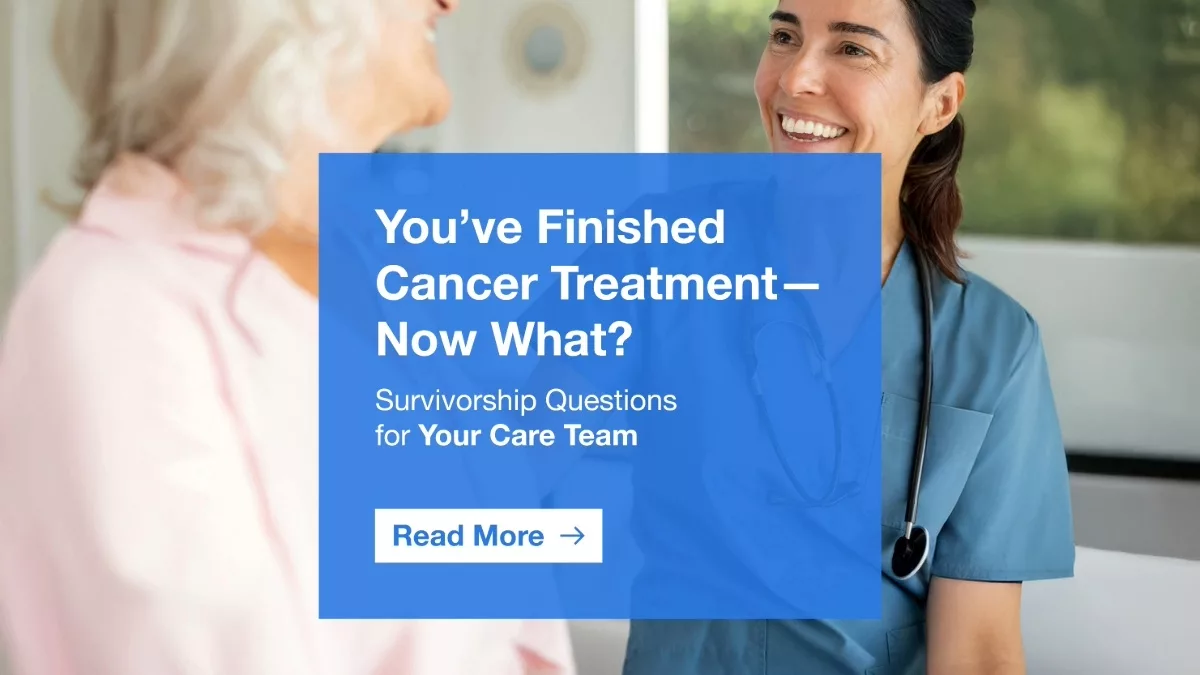
From the moment you receive a cancer diagnosis, you become a survivor—and your journey continues well beyond the end of cancer treatment. Life often looks different, and survivorship can bring a range of physical, emotional, and mental changes. Survivorship care is the next phase of your treatment plan, designed to help you adjust to a new normal, support your ongoing recovery, and embrace life beyond cancer.
As you move forward, asking the right questions can help you feel supported, informed, and reassured. Whether you receive survivorship care with us or with your primary care provider, we’re always here for you.
Key Questions to Ask Your Care Team
Completing cancer treatment is a major milestone, but it often also marks the beginning of new physical, emotional, and practice challenges and adjustments. To help you navigate this transition with confidence, here are important questions to talk about with your doctors and care team:
1. What is survivorship care?
Survivorship care includes the medical and emotional support you receive after your primary cancer treatment ends. It focuses on:
- Monitoring for recurrence
- Managing long-term or late side effects
- Supporting mental and emotional well-being
- Encouraging healthy lifestyle choices
- Your oncology team may even offer specialized survivorship care programs tailored to meet your unique needs. Ask your care team what their program includes and if it’s the right fit for you.
Your oncology team may even offer specialized survivorship care programs tailored to meet your unique needs. Ask your care team what their program includes and if it’s the right fit for you.
2. When will I transition to survivorship care?
The transition to survivorship care usually begins once your initial treatment—such as chemotherapy, radiation, or surgery— is complete. This timing can vary depending on your type of cancer and treatment, but your oncology team will guide you through this process and help you coordinate your ongoing care.
3. What kind of follow-up care do I need, how often, and what will it look like moving forward?
Understanding your follow-up plan is essential. This may involve regular scans, lab tests, or check-ins with your oncologist and primary care provider.
4. What symptoms or changes should I watch out for?
Knowing what signs could indicate a recurrence or complications allows you to seek timely care if needed.
5. How can I manage these side effects or symptoms?
Ask about medications, rehabilitation, or therapies that may help relieve fatigue, neuropathy, or other common post-treatment effects that affect your quality of life.
6. What lifestyle changes can support my health moving forward?
Nutrition, exercise, stress management, and other habits can play a key role in your recovery and wellness.
What mental health or emotional support is available?
Support groups, individual counseling, and community resources can help you process your experience and connect with others. The American Cancer Society and the Cancer Survivors Network are great starting points.
Creating Your Survivorship Care Plan
As you begin this next chapter, your care team may provide a personalized survivorship care plan. This plan summarizes:
- Your diagnosis, treatment history, and familial cancer risk assessment
- Recommended follow-up care
- Possible side effects
- Health and wellness recommendations
- Cancer surveillance and other recommended related tests
This valuable roadmap is designed for both you and any healthcare provider you work with moving forward to make your transition feel clear and supported.
We’re honored to mark this meaningful milestone with you.
Your Role in Survivorship
Life after cancer is a shared journey. Staying engaged in your care, asking questions, and working closely with your care team can help you feel confident and connected as you navigate life beyond cancer.