

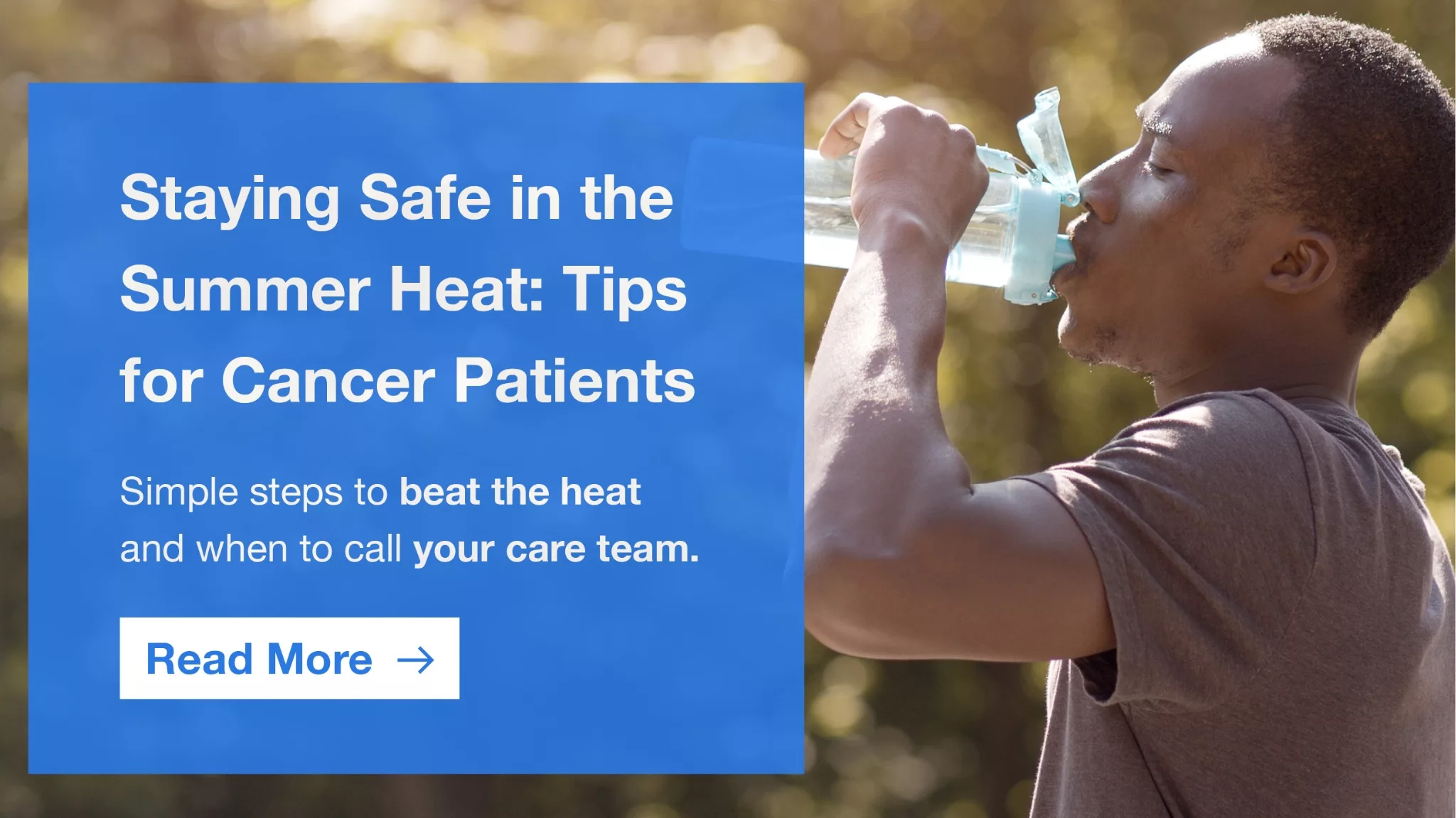
As summer temperatures peak and humidity lingers, cancer patients face unique challenges in the heat. Treatment and recovery can make it harder for the body to regulate temperature, stay hydrated, and avoid complications like heat exhaustion. With a few simple precautions, patients can stay safe and comfortable—even in the late-summer heat.
Why Cancer Patients Need to Be Extra Cautious in the Heat
Cancer and its treatment, especially chemotherapy, radiation, and some immunotherapies, can make it harder for your body to regulate temperature, stay hydrated, and fight infection. Certain medications may increase your risk of sun sensitivity, fatigue, or even heat stroke. And if your immune system is weakened, crowded summer events may increase your exposure to illness.
Simple Steps to Beat the Heat
- Stay Hydrated: this is especially important, and often more difficult, for cancer patients during the summer months. Both cancer and its treatments can increase your risk of dehydration due to a range of side effects like reduced interest in food and drink, nausea, vomiting, or diarrhea. Instead of waiting until you’re thirsty, try sipping water regularly throughout the day. Avoid caffeine and alcohol, which can dehydrate you further and worsen symptoms.
- Time It Right: if you want to get fresh air and exercise, try to go outside early in the morning or later in the evening when the sun is lower and temperatures are cooler. Avoid peak sun hours between 10 a.m. and 4 p.m.
- Dress for the Weather: choose lightweight, loose-fitting clothing and a wide-brimmed hat. Light colors can help reflect the sun’s rays. Don’t forget sunglasses that offer 100% UV protection to help protect your eyes—chemotherapy and radiation can make them more sensitive.
- Protect Your Skin: cancer treatments can make your skin more fragile or prone to sunburn. Use a broad-spectrum sunscreen with SPF 30 or higher, even on cloudy days, and reapply every two hours, or after sweating or swimming. Shade is your best friend.
- Listen to Your Body: heat-related illness can come on Symptoms like dizziness, muscle cramps or weakness, nausea, rapid heartbeat, or confusion could signal dehydration or heat exhaustion. If you experience any of these, move to a cool place and contact your care team right away.
- Keep it Cool Indoors: if you don’t have air conditioning at home, find public places with climate control, such as libraries, shopping centers, or designated cooling centers in your area.
- Maintain a Summer-Ready Emergency Kit: make sure you have access to water, snacks, any necessary medications, a charged phone, and contact information for your oncology care team.
When to Call Your Care Team
Let your doctor know if you:
- Experience any signs of dehydration or heat illness
- Have difficulty staying cool
- Notice changes in your skin (rashes, sunburn, peeling)
- Have persistent nausea, dizziness, or fatigue after being in the heat
Our care team can offer you or a loved one personalized advice tailored to your treatment and symptoms, and help you adjust your plans as needed to stay safe.
Enjoying Summer Safely
Even in the final stretch of summer, connection and joy are still possible with a little extra care. With the right precautions, cancer patients can safely enjoy the season’s final weeks. By staying aware of the risks and making smart choices, cancer patients can enjoy the sunshine without putting their health at risk.
For more guidance or questions about how your treatment may affect your end of summer plans, don’t hesitate to contact our team at any time.