
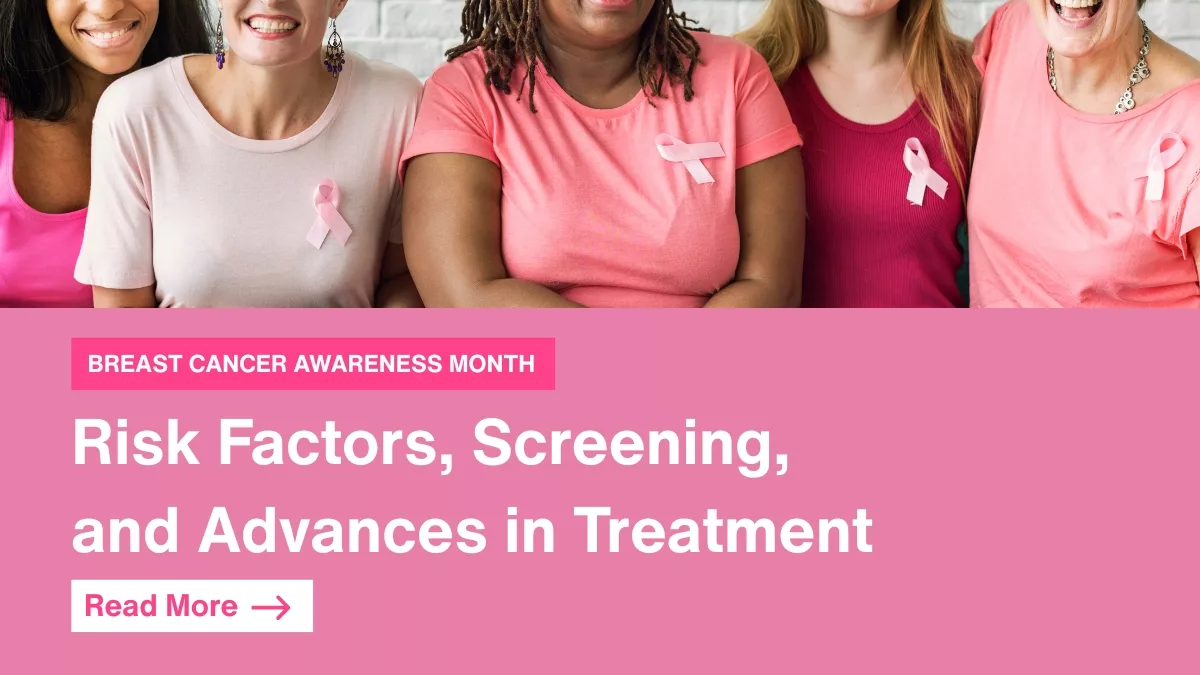
October is Breast Cancer Awareness Month, a time to highlight the importance of prevention, screening, and treatment progress against one of the most common cancers affecting women. While breast cancer remains a serious health concern, advances in detection and therapy are giving patients more hope than ever before.
Understanding the Numbers
Breast cancer remains the most common cancer in women in the United States, except for skin cancers. Approximately 1 in 8 women will develop the disease during their lifetime. While these statistics may seem concerning, there’s reason for hope: when detected early, the 5-year survival rate for localized breast cancer is nearly 99%. This highlights the critical importance of awareness, screening, and early detection.
Key Risk Factors to Know
Some risks cannot be changed, while others can be managed through lifestyle choices.
Inherent Risk Factors
- Age – risk increases with age, especially after 50
- Gender – women are at much higher risk than men
- Family history of breast or ovarian cancer
- Genetic mutations – BRCA1 or BRCA2 are the most well known
- Personal history of breast cancer or certain benign breast conditions
- Dense breast tissue
- Previous chest radiation therapy
- Early menstruation (before age 12) or late menopause (after age 55)
Modifiable Risk Factors
- Alcohol consumption – even moderate drinking increases risk
- Obesity, specifically after menopause
- Lack of physical activity
- Certain types of hormone replacement therapy
- Smoking
- High fat diet
- Low fruit and vegetable intake
- Reproductive factors – having no pregnancies or first pregnancies after the age of 30
Having risk factors does not guarantee a diagnosis but understanding them helps guide screening and lifestyle decisions.
Current Screening Guidelines: The Power of Early Detection
Early detection saves lives, and screening recommendations have evolved based on the latest research and evidence.
National Guidelines
According to the National Comprehensive Cancer Network recommends women start annual mammograms at age 40 as long as the woman is in good health and has a life expectancy of 10 years or more.
High Risk Individuals
Women with a strong family history, BRCA mutations, or prior chest radiation may need earlier and more frequent screening, sometimes starting in their 20s-30s. Additional imaging such as MRI may be recommended.
Self-Awareness
Knowing how your breasts normally look and feel remains an important tool. Report changes such as new lumps, swelling, nipple discharge, or skin dimpling to your healthcare provider right away.
Advances in Breast Cancer Treatment
Treatment is becoming more personalized, precise, and effective thanks to medical innovation.
- Immunotherapy: drugs like pembrolizumab (Keytruda) have changed the outlook for triple-negative breast cancer (TNBC). These immune checkpoint inhibitor treatments help the patient’s own immune system recognize and attack cancer cells more effectively.
- Antibody-Drug Conjugates (ADCs): new therapies, including Trodelvy, deliver chemotherapy directly to cancer cells while sparing healthy tissue. Combined with Keytruda, Trodelvy has recently shown a 35% reduction in disease progression risk in advanced TNBC.
- Targeted Therapies: Targeted therapies, including CDK4/6 inhibitors, HER2-directed drugs, and PARP inhibitors, are improving outcomes for many patients with specific tumor profiles.
- Surgical and Radiation Advances:
- Oncoplastic surgery allows cancer removal with immediate reconstruction
- Sentinel node biopsy reduces the need for extensive lymph removal
- Hypofractionated radiation delivers therapy in fewer sessions with equal effectiveness
- Neoadjuvant Therapy: treatments given before surgery can shrink tumors, allow less invasive surgery, and guide therapy choices.
Taking Action: What You Can Do
- Stay current with screening recommendations for your age and risk level
- Maintain a healthy lifestyle – stay active, keep a healthy weight, and limit alcohol
- Know your family history and ask if genetic testing may be appropriate
- Be aware of changes in your breasts and speak with your provider if something seems unusual
- Don’t skip screenings – early detection saves lives
Questions to Ask Your Healthcare Provider:
- Am I at higher-than-average risk for breast cancer?
- When should I start screening, and how often?
- Would I benefit from genetic counseling?
- What symptoms should prompt me to call your office?
A Message of Hope
Today, more people are surviving breast cancer and living well during and after treatment. Clinical trials, precision medicine, and supportive care continue to improve outcomes.
At Lowcountry Oncology Associates, we are committed to providing compassionate, comprehensive breast cancer care. Whether you’re due for your first mammogram, concerned about symptoms, or seeking advanced treatment, our team is here to guide and support you.
This Breast Cancer Awareness Month, take charge of your health, schedule your screening, know your risk, and share the importance of early detection with loved ones.
To schedule an appointment or learn more about our services, please contact our office at (843)790-8280 or visit www.lowcountryoncology.com. We’re here to support you on your health journey.