

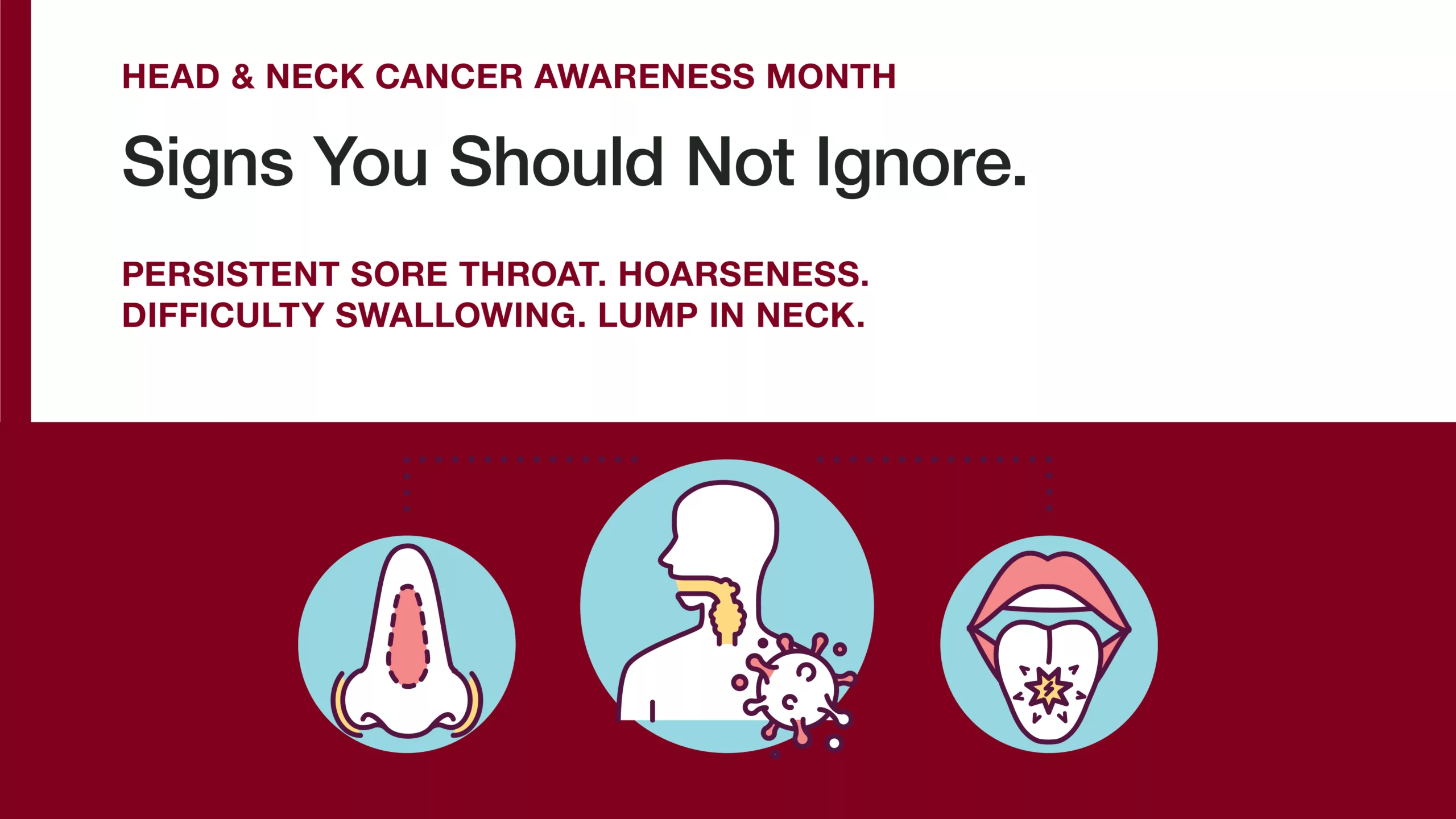
Head and neck cancer symptoms can sometimes seem minor at first but recognizing them early can make a meaningful difference in diagnosis and treatment outcomes. During Head and Neck Cancer Awareness Month, it is important to understand the warning signs and know when to talk with a healthcare provider.
Head and neck cancers develop in the mouth, throat, voice box, nasal cavity, sinuses, or salivary glands. These cancers often begin in the squamous cells that line the surfaces of these areas. According to the American Cancer Society, more than 65,000 people in the United States are diagnosed with head and neck cancers each year.
Awareness of symptoms and risk factors can help support earlier evaluation and treatment.
Common Symptoms to Watch For
Many symptoms of head and neck cancer can resemble common illnesses or minor conditions. However, symptoms that persist for more than two weeks should be evaluated by a healthcare provider.
Signs that should not be ignored include:
- A persistent sore throat
- Hoarseness or changes in the voice
- Difficulty swallowing or pain when swallowing
- A lump or swelling in the neck
- Mouth sores that do not heal
- Persistent ear pain
- Unexplained weight loss
- Red or white patches inside the mouth
While these symptoms may be caused by other conditions, early evaluation helps rule out serious concerns and ensures timely care if needed.
Risk Factors for Head and Neck Cancer
Several factors can increase a person’s risk of developing head and neck cancer.
The most common risk factors include:
- Tobacco use, including cigarettes, cigars, pipes, and smokeless tobacco
- Heavy alcohol consumption
- Infection with human papillomavirus (HPV), particularly HPV-16
- Prolonged sun exposure to the lips
- Poor oral hygiene
- Exposure to certain workplace chemicals or dust
HPV-related cancers of the throat have become increasingly common in recent years, particularly among younger adults who may not have traditional risk factors such as tobacco use.
Why Early Evaluation Matters
Head and neck cancers are often more treatable when they are detected early. If symptoms persist or worsen, your provider may recommend imaging tests, a biopsy, or referral to a specialist for further evaluation.
Early diagnosis can allow for more treatment options and may reduce the need for more aggressive therapies.
Regular dental visits, awareness of changes in your mouth or throat, and conversations with your healthcare provider about symptoms are important steps in early detection.
When to Talk to Your Doctor
If you notice any persistent symptoms involving the mouth, throat, or neck, especially those lasting longer than two weeks, it is important to seek medical evaluation. Early assessment helps identify the cause and ensures appropriate care.
During Head and Neck Cancer Awareness Month, taking a moment to understand these warning signs can help individuals recognize when to seek care and support earlier detection.