

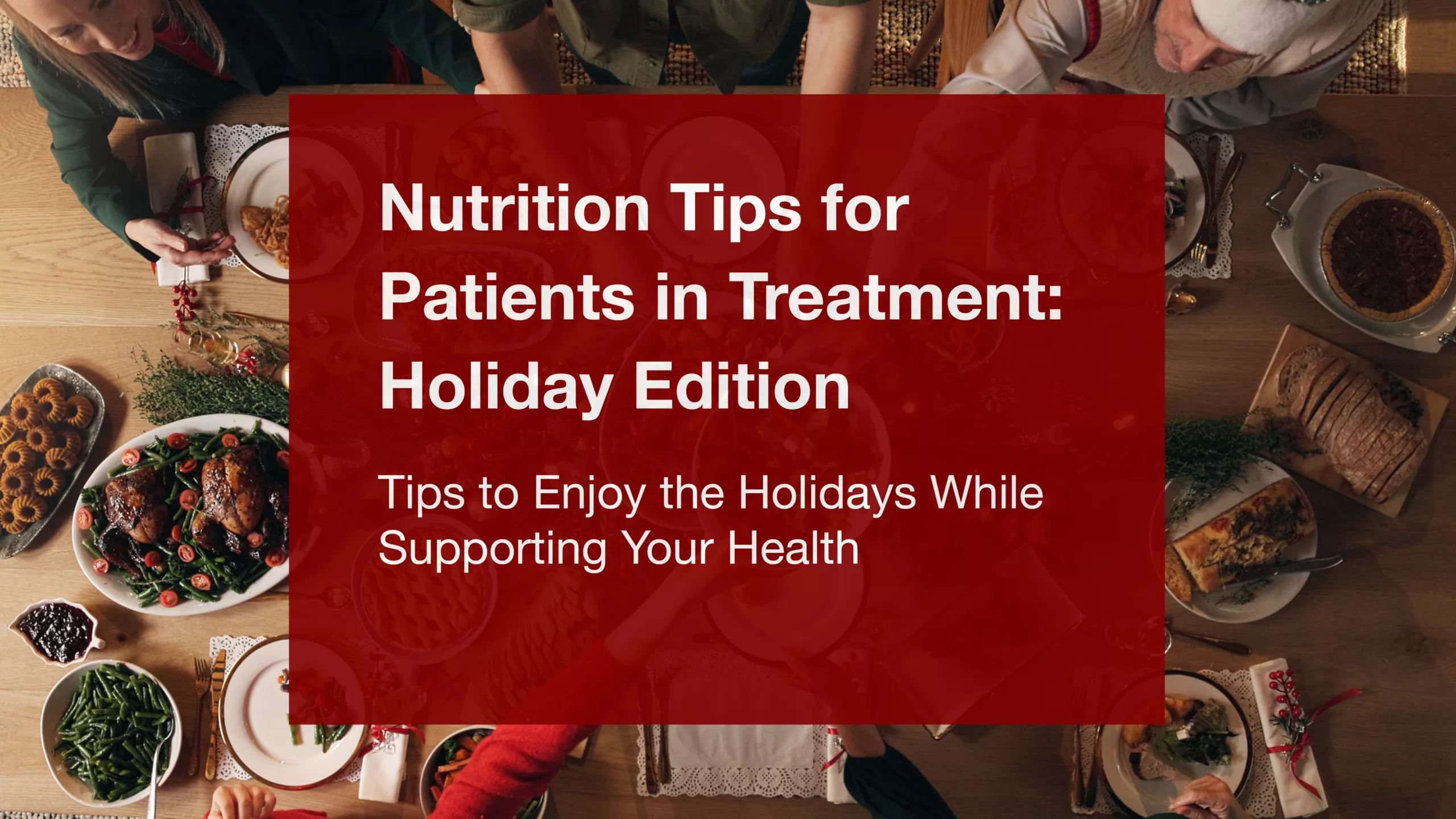
Nutrition during cancer treatment plays a vital role in helping you feel your best, especially during the holiday season when meals and gatherings are centered around food. While the holidays can bring joy and comfort, they can also present challenges if you are managing side effects like nausea, fatigue, taste changes, or appetite loss.
Staying nourished through treatment is not about strict diets or perfect meals; it is about making choices that support healing and help you feel good while still enjoying the season.
Why Holiday Eating May Feel Different During Treatment
Cancer treatments such as chemotherapy, radiation, surgery, or immunotherapy can change how you eat, how food tastes, and how your body digests it. These side effects can lead to:
- Loss of appetite or feeling full quickly
- Taste of smell changes
- Digestive discomfort or nausea
- Difficulty chewing or swallowing
- Fatigue that makes meal prep harder
The holidays may add social pressure or emotional stress to this mix. Being kind to yourself and making realistic, flexible food choices can help reduce anxiety and improve your well-being.
Tips to Enjoy the Holidays While Supporting Your Health
- Eat smaller, more frequent meals
If you are not very hungry or feel full quickly, eat a little bit every 2 to 3 hours. You do not need to wait for a big meal; nutrient-rich snacks throughout the day can be easier to tolerate.
- Choose high-protein, higher-calorie options
Try dishes like mashed potatoes, turkey, casseroles, smoothies, and oatmeal. You can also add olive oil, nut butter, or avocado for extra energy and nutrients.
- Stay hydrated
Even mile dehydration can increase fatigue or worsen nausea. Sip water, herbal teas, clear broths, or electrolyte drinks regularly throughout the day.
- Bring your own dish to gatherings
Consider preparing a soft or familiar dish you know you can tolerate, especially if you are concerned about flavor sensitivity, nausea, or appetite loss.
- Ask for support if eating is difficult
If you’re skipping meals or losing weight, talk to your care team. A registered dietitian can provide meal ideas, oral supplements, and side effect-specific strategies.
When to Call Your Provider
Let your provider know if you experience:
- Ongoing nausea or vomiting
- Difficulty swallowing or painful mouth sores
- Unintentional weight loss
- Trouble staying hydrated
- Loss of appetite for more than a few days
Nutrition is essential to your strength and recovery. Do not wait to ask for help.
At Lowcountry Oncology Associates, we support every part of your treatment, including your nutrition. The holidays may look different this year, and that is okay. Whether you need help managing symptoms, finding foods you can tolerate, or simply need encouragement, we are here for you.