

Cold and flu season can be especially risky for patients with weakened immune systems, including those undergoing cancer treatment. With increased time indoors and more circulating viruses, it’s important to take extra precautions to stay healthy and know when to reach out for support.
Why Cancer Patients Are More Vulnerable
Treatments such as chemotherapy, radiation, and certain immunotherapies can weaken the immune system, reducing your ability to fight off infections like the flu or RSV. Even a common cold can lead to complications for immunocompromised patients. That’s why staying proactive is key during this time of year.
Tips to Protect Yourself During Cold & Flu Season
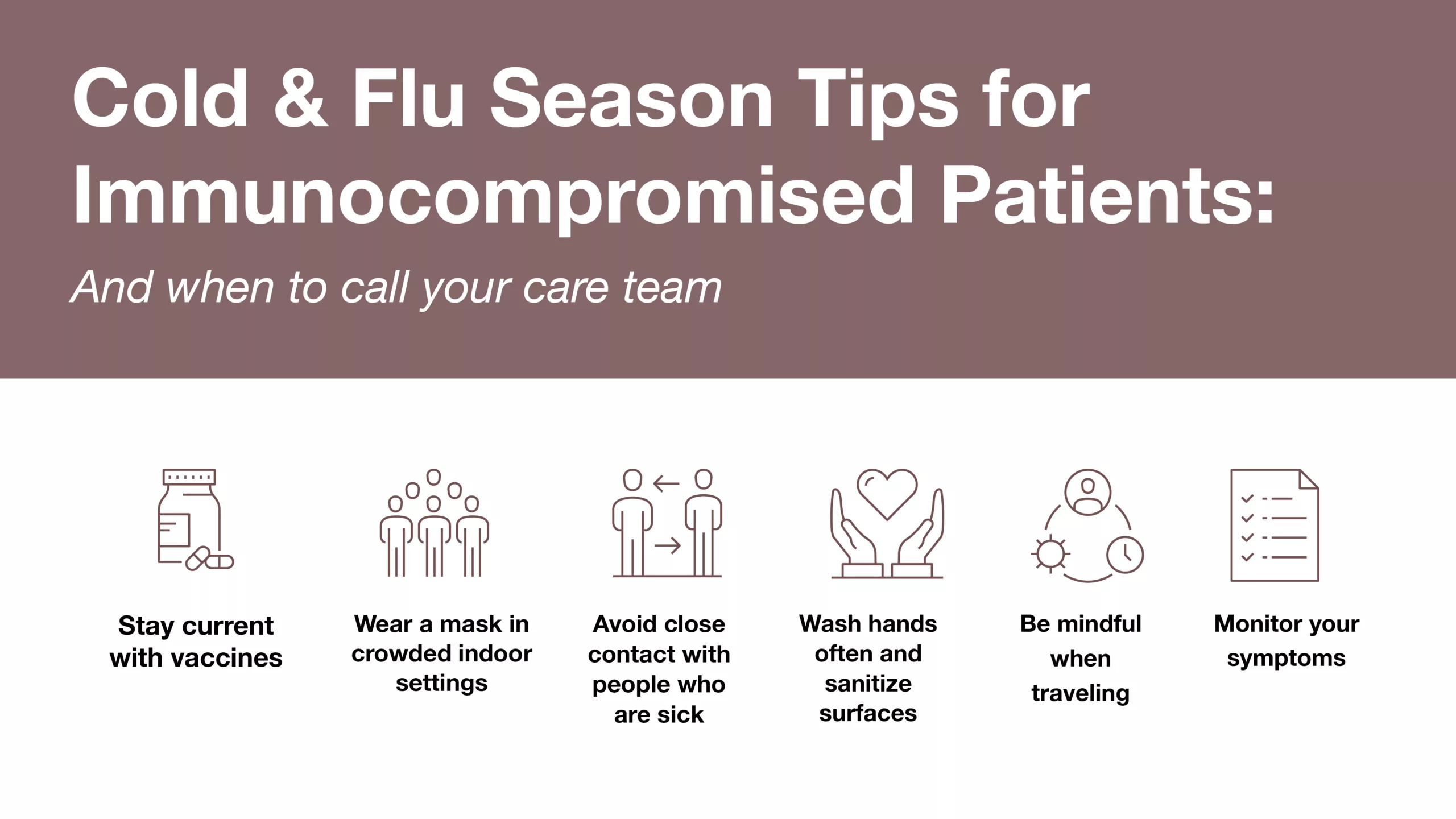
- Stay up to date on vaccines: Ask your care team if you’re eligible for the flu vaccine, updated COVID-19 boosters, or the RSV vaccine. These vaccines may reduce your risk of serious illness.
- Wear a mask in crowded indoor settings: Masks can help prevent exposure to respiratory viruses, especially in places like grocery stores, waiting rooms, or public transportation.
- Avoid close contact with people who are sick: Even loved ones with “just a cold” can transmit viruses. It’s okay to set boundaries or ask people to mask or postpone visits if they’re feeling unwell.
- Wash hands often and sanitize surfaces: Hand hygiene is one of the simplest and most effective ways to prevent infection. Carry hand sanitizer when you’re out and regularly disinfect high-touch surfaces at home.
- Be mindful while traveling: If you’re flying or using public transportation, wear a high-quality mask and carry hand sanitizer. Avoid touching your face and be sure to stay hydrated.
- Monitor your symptoms: Pay attention to early signs like a sore throat, cough, runny nose, or fatigue. Keep a thermometer on hand and monitor for fever.
When to Call Your Care Team
Contact your care team right away if you experience:
- A fever of 100.4°F or higher
- Chills or night sweats
- Persistent cough or difficulty breathing
- Sore throat, nasal congestion, or sinus pressure
- Exposure to someone with flu, RSV, or COVID-19
Even mild symptoms can be serious for immunocompromised patients, so never hesitate to call.
Final Thoughts
Cold and flu season may bring added risks, but with the right precautions, you can still enjoy daily life and time with loved ones. Always feel free to reach out to our team about what’s safest for you and how to stay protected this winter.
If you’re unsure about your exposure risk or vaccine eligibility, we’re here to help.