

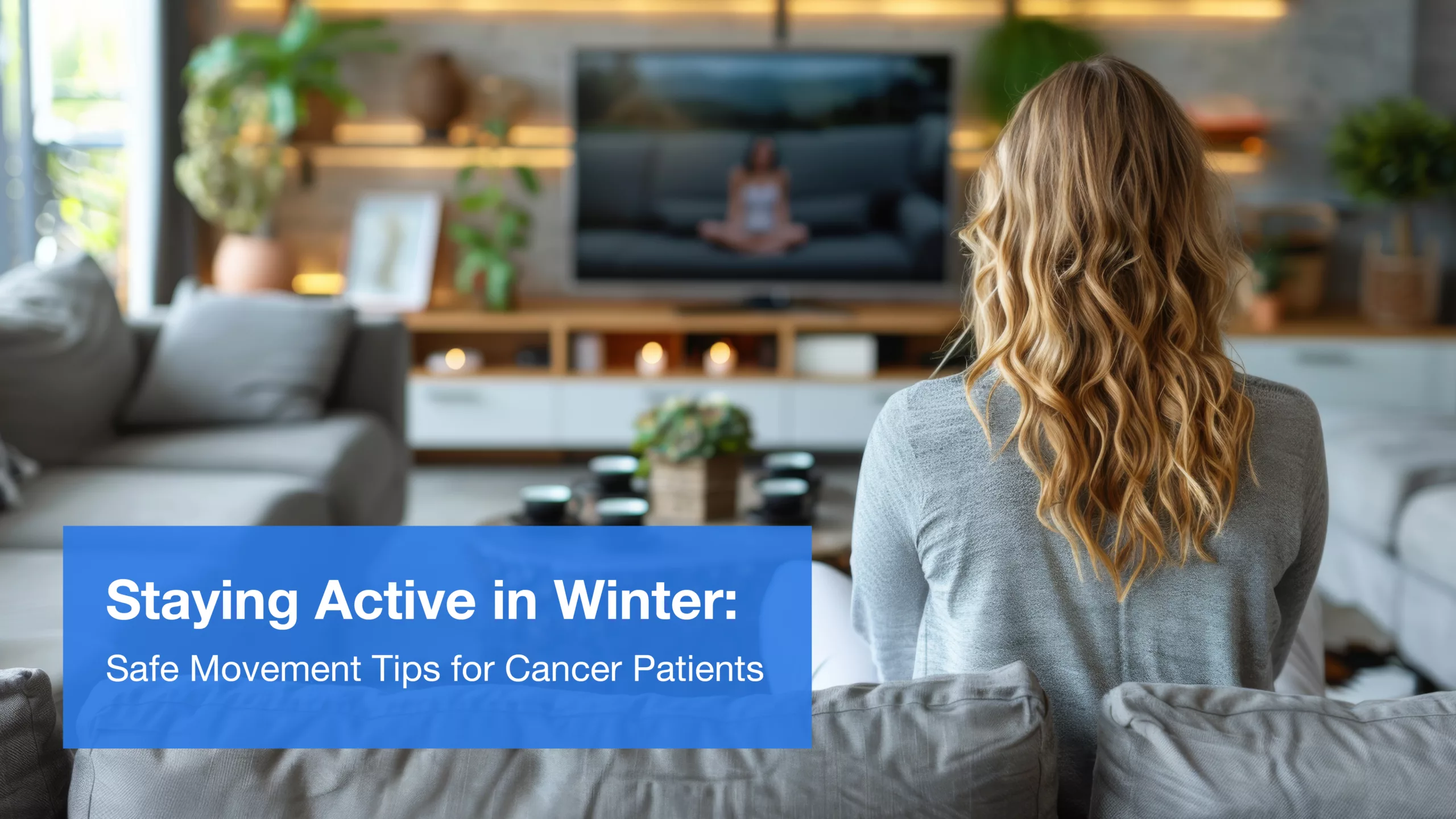
Staying active in winter can be challenging for anyone, but especially for people going through cancer treatment. Cold temperatures, joint stiffness, fatigue, and even emotional lows can make movement feel difficult, or not worth the effort. But gentle, consistent activity can help boost energy, reduce stress, and support long-term recovery.
Why Movement Matters During Treatment
You don’t need to do strenuous exercise to see the benefits. Light movement can support circulation, reduce muscle tightness, help regulate mood, and improve sleep. It may also help manage treatment-related side effects like fatigue and joint discomfort.
Gentle Ways to Stay Active Indoors
- Indoor walking: try walking short laps around your home, a hallway, or an indoor mall. Use supportive shoes and set a small goal like 5-10 minutes a few times a day.
- Chair yoga or seated stretches: chair-based movement is a safe option for those with limited strength or mobility. Gentle stretches and breath work can improve flexibility and calm the nervous system.
- Stretching routines: simple morning or evening stretches can reduce stiffness and help with joint discomfort. Focus on slow, steady movements and listen to your body.
- Light resistance or balance exercises: if approved by your care team, consider using light resistance bands or bodyweight exercises. This may support muscle strength and bone health, especially if you’re in treatment that impacts mobility or balance.
Energy Conservation Tips
During treatment, it’s normal to have limited energy. Here are a few tips to stay active without overdoing it:
- Break movement into short sessions throughout the day
- Sit when possible, during daily tasks like folding laundry or prepping food
- Plan activities around your energy peaks, usually in the morning or after a nap
- Rest when needed, without guilt, recovery is still part of the process
If you’re unsure what level of movement is right for you, talk with your provider, oncology rehab specialist, or survivorship team. They can help build a plan that honors your current needs and goals.
When to Be Cautious
Always check with your oncology team before starting a new routine. In some cases, for example, if you have bone metastases, low blood counts, or are at risk of falling, you may need modified or supervised movement plans.
If you experience dizziness, pain, unusual shortness of breath, or chest pain while moving, stop and contact your care team.
You Don’t Have to Go It Alone
Whether you’re stretching by the window, doing chair yoga, or taking a walk through your local indoor mall, movement is a way to stay connected to your body and your healing. And you don’t have to do it perfectly, just doing something, however small, can make a difference.
Our team is here to support your wellness goals every step of the way.