by Jessica Mason | Dec 11, 2025 | Uncategorized
Understanding fatigue in cancer treatment means recognizing how persistent tiredness during and after therapy is different from regular fatigue and learning what to do about it. Cancer-related fatigue is one of the most common side effects of cancer and cancer treatment, and it can impact your quality of life in serious ways.
What Makes Cancer-Related Fatigue Different?
This type of fatigue is not just being tired. It is a constant sense of physical, emotional, or cognitive exhaustion that does not always go away with rest. Fatigue may be caused by:
- The cancer itself or treatments, such as chemotherapy, radiation, surgery, or biologic therapies
- Side-effects like anemia, low energy, poor sleep, pain, or infection
- Emotional and psychological stress like worry, anxiety, depression, can all intensify fatigue
- Lifestyle factors: inadequate nutrition, dehydration, inactivity, poor sleep habits
Because fatigue can have many contributors, it’s important to talk with your care team about your symptoms so they can help find causes and solutions.
Why It Matters
When fatigue is unaddressed, it can affect:
- Your ability to maintain daily tasks or treatment schedules.
- Your emotional health and social life.
- Your energy for things that matter: work, hobbies, time with family, etc. That’s why managing fatigue is a vital part of cancer care.
How to Manage Fatigue: Practical Strategies
While fatigue may not vanish overnight, there are proven steps that can help you regain energy, feel better, and live more fully during treatment.
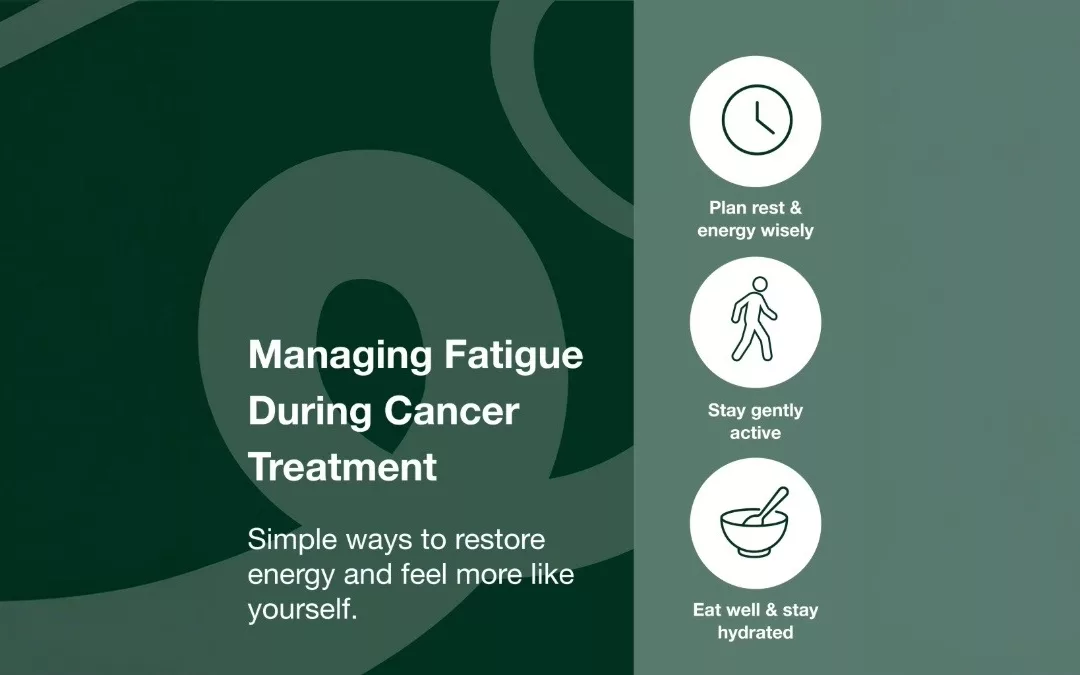
- Prioritize rest and plan energy wisely
Rest when you need and plan your highest energy tasks for when you feel best. Use breaks, delegate tasks, and save energy for what matters most.
- Stay as active as you safely can
Light to moderate physical activity, like walking, gentle stretching or yoga, has been shown to reduce fatigue and improve energy levels. Begin slowly and talk with your provider first.
- Eat well and stay hydrated
Good nutrition supports your body’s recovery and energy. Frequent small meals, protein-rich foods, plenty of fluids and managing side-effects like nausea all help.
- Improve sleep quality
Poor sleep can worsen fatigue. Try to have regular sleep times, limit naps (especially long ones), reduce caffeine later in the day, and make your sleeping environment restful.
- Address emotional and mental health
Fatigue isn’t just physical. Stress, anxiety, and depression can deepen it. Talk with your care team, use counseling, join a support group, and explore mind-body techniques like mindfulness or meditation.
- Review your treatment and medical factors
Ask your provider if there are treatable causes of your fatigue, such as anemia, thyroid or hormone issues, pain or infection. Some medications or therapies may be adjusted.
When to Speak Up
Contact your care team if you notice:
- New or worsening fatigue that interrupts your life or treatment
- Fatigue accompanied by other symptoms like shortness of breath, chest pain, heavy bleeding
- Depression or anxiety that you can’t manage
- Signs of new medical issues like infection, anemia, or other illness
Lowcountry Oncology Associates Is Here for You
At Lowcountry Oncology Associates, we understand fatigue during cancer treatment can feel overwhelming. Our team is ready to help you:
- Track and manage your energy levels
- Create an individual fatigue management plan
- Connect you with physical therapy, nutrition, emotional support, or other services
You don’t have to face fatigue alone, let us walk this journey with you in all parts of your cancer journey.
by Jessica Mason | Dec 2, 2025 | Uncategorized
Coping with cancer during the holidays can bring a unique mix of emotions, from gratitude and connection to stress and fatigue. For patients and families, navigating treatment or recovery, this time of year may look different, but it can still hold meaning. With the right support, preparation, and self‑care, you can find balance between celebration and rest.
Why the Holidays Can Be Harder When You Have Cancer
When you are living with cancer or caring for someone who is, you may face:
- Changes in your energy, symptoms, mood or outlook
- Emotional stress including grief, fear, or reflection on what’s changed
- Practical burdens such as travel, gatherings, hosting, and managing treatment side-effects at the same time
- Disrupted routines, altered roles in family or holiday traditions, or feeling “out of step” with what everything else is doing
Understanding these realities is the first step in taking care of your needs so that you can engage in the holiday season on your terms.
Practical Strategies for Patients
- Acknowledge your limits and plan accordingly
It’s okay if this year looks different. Ask yourself what matters most and what you can realistically do. The Mayo Clinic Cancer Center blogs suggest setting a “Plan A, Plan B, Plan C” for gatherings and self-care.
- Prioritize rest and symptom management
Listen to your body. Your body is working hard to both heal and handle treatment, so it’s important to listen to what it’s telling you. If you’re tired, rest, if you’re in pain or something feels off, speak up. Give yourself permission to rest or adjust your plans because your body knows what it needs.
- Stay flexible with traditions
You may not be able to do everything you used to, and that’s okay, but you can still celebrate! Adapt traditions – pass off hosting duties, attend fewer hours, or shift to a virtual gathering if needed.
- Focus on nourishment, not perfection.
Food is part of celebration but so is feeling well. Choose foods that align with your treatment plan and energy level.
- Stay connected.
Whether it’s a text, call, or visit, small connections can lift your mood. Let people know how they can support you.
Support for Families and Caregivers
Families and caregivers also face unique pressures during the holidays: juggling their roles, emotional stress, and the added weight of helping a loved one. Some helpful suggestions:
- Have a conversation with the person you’re caring for about what the holiday should look like this year
- Delegate tasks: gifting, decorating, cooking doesn’t have to fall on one person
- Give yourself permission to take breaks too or say no to additional commitments
- You might experience feelings of guilt, grief, or frustration, which are valid emotions worth acknowledging
- Seek caregiver‑specific resources or support groups through your care team or local support groups
When to Reach Out for Extra Help
If you or your loved ones notice any of the following, consider contacting your care team or a mental health professional:
- Persistent sadness, withdrawal, or anxiety beyond a couple weeks
- Trouble managing physical side-effects that interfere with gathering or self-care
- Feeling overwhelmed by the demands of the holidays and cancer care
- Caregiver burnout, fatigue, or strain that is affecting your health
Lowcountry Oncology Associates Is Here for You
At Lowcountry Oncology Associates, our team understands how the holidays can be both meaningful and challenging when you’re dealing with cancer. We offer flexible scheduling around holiday treatment needs. If you’d like to schedule an appointment, please reach out to us at 843-790-8280.

by Jessica Mason | Nov 21, 2025 | Uncategorized
Behind every patient is often a caregiver, a spouse, parent, child, or close friend, providing physical, emotional, and logistical support. While cancer care focuses on the patient, caregivers play a vital role in daily life, medical appointments, and long-term healing.
Being a caregiver can be both meaningful and overwhelming. That’s why caregivers need support too. Whether you are stepping into this role for the first time or have been supporting a loved one for years, there are resources and strategies that can help.
Understanding the Caregiver’s Role
Caregivers are often responsible for tasks that extend far beyond what they expected. You may find yourself:
- Driving to and from appointments
- Managing medications and side effects
- Helping with meals, bathing, and mobility
- Tracking symptoms and communicating with the care team
- Offering emotional encouragement
- Handling insurance or financial paperwork
Acknowledging the scope of your role is the first step toward finding balance and support.
Common Challenges Caregivers Experience
It is normal to feel tired, uncertain, or emotionally drained. Some of the most common challenges include:
- Physical exhaustion and poor sleep
- Anxiety or fear about the future
- Feelings of guilt for needing personal time
- Financial strain or employment challenges
- Social isolation or lack of personal support
Taking care of your own health and well-being is not selfish, it is necessary.
Self-Care for Caregivers
Caring for yourself improves your ability to care for someone else. Here are some ways to protect your health and energy:
- Take breaks when possible. Even a few minutes can reset your mind.
- Stay connected. Reach out to friends, join a support group, or talk to others in similar roles.
- Ask for help. Family, neighbors, or professional services can take tasks off your plate.
- Prioritize your health. Keep up with medical your own appointments, sleep, hydration, and meals.
- Seek emotional support. Consider speaking with a counselor or therapist.
- Set realistic expectations. You cannot do everything, and that is okay.
Helpful Resources for Cancer Caregivers
You are not alone, and many organizations offer free or low-cost support:
A Final Reminder: Caregivers Need Care Too
Caregiving can be a powerful expression of love, but it can also take a toll on your mental, emotional, and physical health. You are doing an incredible job, and you deserve the same compassion and support you give to others.
Make time to rest. Ask for help when you need it. And remember that being a strong caregiver includes caring for yourself.
by Jessica Mason | Nov 19, 2025 | Uncategorized
Lung cancer remains one of the leading causes of cancer-related deaths in the U.S., largely because it’s often found at a later stage. But the earlier it’s caught, the more treatment options there are. Understanding your personal risk and whether screening is right for you can be lifesaving.
Understanding Lung Cancer Risk
Lung cancer risk is influenced by a mix of lifestyle, environmental, and genetic factors. Here’s what to know:
- Tobacco use is the biggest risk factor. Smoking cigarettes, cigars, or pipes damages lung tissue and significantly increases your risk over time. Even exposure to secondhand smoke can raise lung cancer risk.
- Pack-year history (e.g., 1 pack a day for 20 years = 20 pack-years) is used to measure long-term exposure.
- Former smokers are still at risk, especially within the first 15 years of quitting.
- Secondhand smoke also increases risk, particularly with long-term exposure.
- Environmental exposure to radon gas (a naturally occurring radioactive gas) is the second leading cause of lung cancer in the U.S.
- Occupational exposure to substances like asbestos, arsenic, diesel exhaust, and silica dust can raise risk, especially in industries such as mining, construction, and manufacturing.
- Radiation therapy to the chest, often for previous cancers (like breast or lymphoma), can slightly increase risk over time.
- Family history of lung cancer may signal inherited genetic susceptibility.
- Certain dietary supplements, like beta carotene taken in high doses by smokers or former smokers, have actually been shown to increase lung cancer risk.
- Chronic lung conditions like COPD or pulmonary fibrosis can also elevate risk.
Having one or more of these risk factors doesn’t mean you will get cancer, but it does mean screening might be worth discussing with your doctor.
The Role of Screening in Lung Cancer
Lung cancer screening means finding disease before symptoms appear, when it’s most treatable. The only recommended test for early detection is low-dose computed tomography (LDCT), which uses lower levels of radiation than a standard CT scan to create detailed images of the lungs.
LDCT can detect small nodules or abnormalities before they grow or speed. The National Lung Screening Trial (NLST) showed that LDCT reduces lung cancer deaths by about 20% compared to chest X-rays.
Who Should Be Screened?
The U.S. Preventative Services Task Force recommends annual LDCT lung cancer screening if you meet all of the following:
- You’re between 50 and 80 years old
- You have a 20 pack-year or more smoking history
- You currently smoke or quit within the last 15 years
- You are in relatively good health and would be eligible for treatment if cancer is found
If you don’t meet all of these criteria, talk to your provider, especially if you have other risk factors, such as occupational or environmental exposures.
Benefits of LDCT Screening
- Catches lung cancer at an early, more treatable stage
- Reduces the risk of dying from lung cancer
- Offers peace of mind when results are normal
The decision to screen should be made together with your care team, based on your full medical history and personal values.
Taking the Next Step
If you think you may qualify for lung cancer screening or you’re unsure, start by:
- Talking with your doctor about your smoking history and risk factors
- Requesting a risk assessment to see if LDCT is recommended
- Finding a high-quality screening center that follows national guidelines
- Making a quit plan. If you’re still smoking, stopping now can dramatically lower your risk
- Committing to yearly follow-up if screening is recommended
Even if you’ve quit smoking, your lungs deserve regular attention. Screening is about giving yourself the best chance at early detection and better outcomes.
The Bottom Line
Lung cancer screening isn’t right for everyone, but for those at higher risk, it could save your life. If you’re unsure, a simple conversation with your provider is a good first step. You don’t have to face your risk alone; your care team is here to help.
by Jessica Mason | Nov 4, 2025 | Uncategorized
Pancreatic cancer is one of the most difficult cancers to detect and treat, but increased awareness, earlier diagnosis, and new treatment advances are giving patients more options than ever. Whether you are seeking information for yourself or someone you love, it helps to understand the signs, risks, and developments in care.
Why Pancreatic Cancer is Often Diagnosed Late
The pancreas is located deep in the abdomen behind the stomach and plays a key role in digestion and blood sugar regulation. Because of its location, pancreatic cancer rarely causes symptoms until it is more advanced.
Most cases are pancreatic adenocarcinoma, which begins in the cells lining the pancreatic ducts. Less common types include pancreatic neuroendocrine tumors.
Symptoms to Watch For
Symptoms of pancreatic cancer can be subtle or confused with other conditions. Common warning signs include:
- Yellowing of the skin or eyes (jaundice)
- Unexplained weight loss
- Loss of appetite
- Abdominal or back pain
- Fatigue or weakness
- Dark colored urine or itching
- Greasy, light-colored, or foul-smelling stools
- New-onset diabetes, particularly in older adults
If you experience any of these symptoms, especially if they persist, speak with your healthcare provider.
Who Is at Risk for Pancreatic Cancer?
Some risk factors for pancreatic cancer are outside of your control, while others can be reduced through lifestyle changes. Key risk factors include:
- Age over 60
- Smoking
- Family history of pancreatic, breast, or ovarian cancer
- Inherited gene mutations such as BRCA1, BRCA2, PALB2, or Lynch syndrome
- Chronic pancreatitis
- Type 2 diabetes, especially if recently diagnosed
- Obesity
- A diet high in red or processed meat and low in fruits and vegetables
- Excessive alcohol use, especially when linked to chronic pancreatitis
- Exposure to certain workplace chemicals used in metalworking and dry cleaning
If you have multiple risk factors, your doctor may recommend earlier monitoring or genetic counseling.
How Pancreatic Cancer is Diagnosed
Diagnosis typically starts after symptoms arise. Since there is no standard screening test for the general population, doctors rely on imaging and laboratory testing to evaluate symptoms. This may include:
- CT or MRI scans to locate tumors
- Endoscopic ultrasound (EUS) or ERCP to examine or biopsy the pancreas
- CA 19-9 blood test, which may indicate cancer activity
- Genetic and tumor testing to guide personalized treatment
Individuals with a strong family history may be candidates for high-risk surveillance programs.
Treatment Options and What’s New
Pancreatic cancer treatment depends on several factors including cancer stage, location, and a patient’s overall health. Options include:
- Surgery such as the Whipple procedure when the cancer is caught early and localized
- Chemotherapy either before or after surgery, or as a primary treatment
- Radiation therapy to help shrink tumors or treat symptoms
- Targeted therapy for patients with specific genetic mutations
- Immunotherapy in select cases, such as tumors with mismatch repair deficiency or microsatellite instability
Recent advancements include:
- Increased use of molecular profiling to guide treatment decisions
- Access to clinical trials exploring new drug combinations and immunotherapy
- Better imaging technology to identify cancer earlier and more accurately
Support Through Every Step
Pancreatic cancer is not just a physical challenge. Emotional, nutritional, and practical support are equally important. Patients and caregivers may benefit from nutrition guidance, palliative care to manage symptoms, genetic counseling, support groups or one-on-one emotional support, or survivorship planning.
We are committed to supporting every part of the journey, not just the medical treatment.
What You Can Do to Lower Risk
There is no guaranteed way to prevent pancreatic cancer, but you can reduce your risk by:
- Not smoking
- Maintaining a healthy weight
- Eating more whole fruits, vegetables, and whole grains
- Limiting red and processed meats
- Avoiding excessive alcohol
- Managing chronic conditions such as diabetes or pancreatitis
If you have a family history of pancreatic cancer, ask your doctor whether genetic counseling or early detection testing is right for you.