

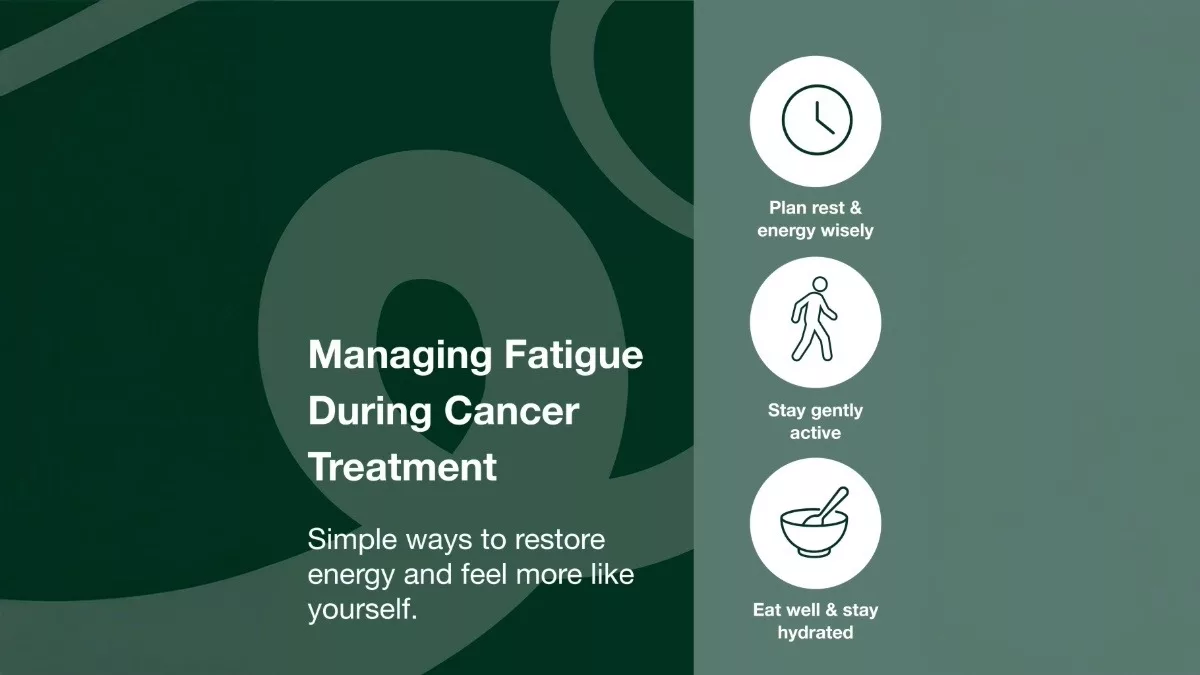
Understanding fatigue in cancer treatment means recognizing how persistent tiredness during and after therapy is different from regular fatigue and learning what to do about it. Cancer-related fatigue is one of the most common side effects of cancer and cancer treatment, and it can impact your quality of life in serious ways.
What Makes Cancer-Related Fatigue Different?
This type of fatigue is not just being tired. It is a constant sense of physical, emotional, or cognitive exhaustion that does not always go away with rest. Fatigue may be caused by:
- The cancer itself or treatments, such as chemotherapy, radiation, surgery, or biologic therapies
- Side-effects like anemia, low energy, poor sleep, pain, or infection
- Emotional and psychological stress like worry, anxiety, depression, can all intensify fatigue
- Lifestyle factors: inadequate nutrition, dehydration, inactivity, poor sleep habits
Because fatigue can have many contributors, it’s important to talk with your care team about your symptoms so they can help find causes and solutions.
Why It Matters
When fatigue is unaddressed, it can affect:
- Your ability to maintain daily tasks or treatment schedules.
- Your emotional health and social life.
- Your energy for things that matter: work, hobbies, time with family, etc. That’s why managing fatigue is a vital part of cancer care.
How to Manage Fatigue: Practical Strategies
While fatigue may not vanish overnight, there are proven steps that can help you regain energy, feel better, and live more fully during treatment.
- Prioritize rest and plan energy wisely
Rest when you need and plan your highest energy tasks for when you feel best. Use breaks, delegate tasks, and save energy for what matters most.
- Stay as active as you safely can
Light to moderate physical activity, like walking, gentle stretching or yoga, has been shown to reduce fatigue and improve energy levels. Begin slowly and talk with your provider first.
- Eat well and stay hydrated
Good nutrition supports your body’s recovery and energy. Frequent small meals, protein-rich foods, plenty of fluids and managing side-effects like nausea all help.
- Improve sleep quality
Poor sleep can worsen fatigue. Try to have regular sleep times, limit naps (especially long ones), reduce caffeine later in the day, and make your sleeping environment restful.
- Address emotional and mental health
Fatigue isn’t just physical. Stress, anxiety, and depression can deepen it. Talk with your care team, use counseling, join a support group, and explore mind-body techniques like mindfulness or meditation.
- Review your treatment and medical factors
Ask your provider if there are treatable causes of your fatigue, such as anemia, thyroid or hormone issues, pain or infection. Some medications or therapies may be adjusted.
When to Speak Up
Contact your care team if you notice:
- New or worsening fatigue that interrupts your life or treatment
- Fatigue accompanied by other symptoms like shortness of breath, chest pain, heavy bleeding
- Depression or anxiety that you can’t manage
- Signs of new medical issues like infection, anemia, or other illness
Lowcountry Oncology Associates Is Here for You
At Lowcountry Oncology Associates, we understand fatigue during cancer treatment can feel overwhelming. Our team is ready to help you:
- Track and manage your energy levels
- Create an individual fatigue management plan
- Connect you with physical therapy, nutrition, emotional support, or other services
You don’t have to face fatigue alone, let us walk this journey with you in all parts of your cancer journey.